The load payment is revenue. Your earnings are what remain after the business pays its bills.
Before you leave a warehouse job, finance a truck, or accept your first delivery, answer one question: How much does this business need to bring in to pay its expenses—and pay you?
For a prospective box truck owner-operator in Matteson, a weekly revenue screenshot leaves too much unanswered. It doesn’t show empty return trips, loading delays, repair bills, insurance payments, or invoices that haven’t been collected.
This guide explains how to evaluate those costs before committing your savings.
What does it cost to operate a box truck?
Box truck operating costs include fuel, maintenance, tires, insurance, truck payments or depreciation, parking, tolls, registration, business administration, and any employees or contractors.
Your actual costs depend on the truck and the operation. A local delivery business and an interstate freight business should not use the same budget simply because both operate a 26-foot box truck.
Separate your expenses into three groups:
| Cost group | What to include | Why it matters |
|---|---|---|
| Recurring costs | Insurance, truck payment, parking, software, bookkeeping | These bills can continue during a slow week. |
| Operating costs | Fuel, tolls, maintenance, tires, delivery-related charges | These change with mileage, usage, and the work accepted. |
| Reserves and owner compensation | Repair reserve, replacement savings, taxes, and payment for your work | Cash left in the account is not automatically available to spend. |
Avoid counting the same expense twice. For example, a cash-flow budget tracks loan payments, while an accounting profit calculation treats financing and depreciation differently. An accountant can help establish the right method.
How deadhead miles reduce box truck revenue per mile
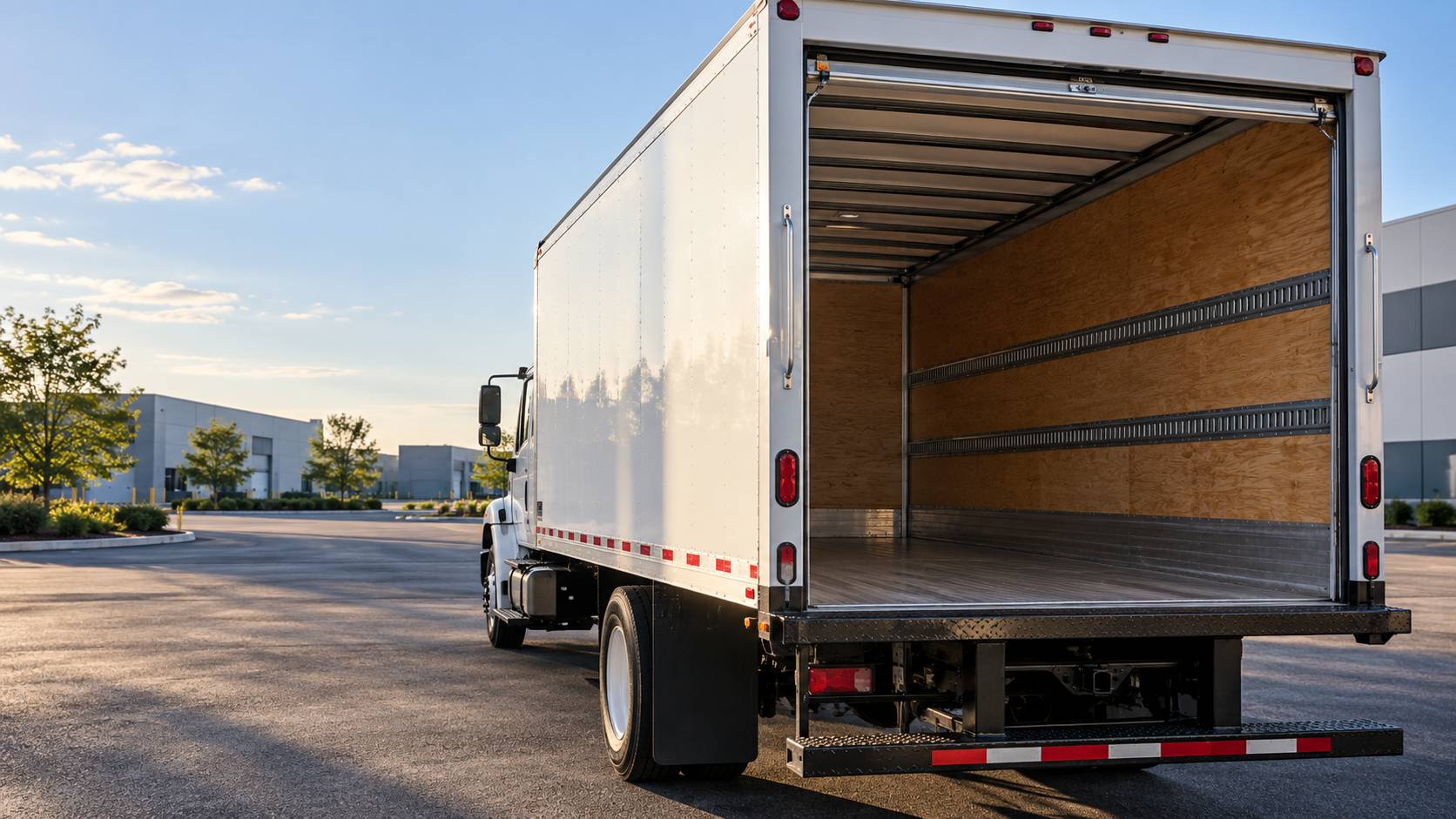
Deadhead miles are miles driven without a paying load. They can include traveling to a pickup, repositioning after delivery, or returning to your operating base.
Here is a worked example—not an actual load listing or a claim about available Matteson freight rates:
A customer pays $640 for a delivery covering 200 loaded miles.
| Trip outcome | Total miles | Gross revenue per total mile |
|---|---|---|
| Count only the loaded movement | 200 | $3.20 |
| Add 100 unpaid miles | 300 | $2.13 |
| Return empty another 200 miles | 400 | $1.60 |
The payment never changed. The amount of driving required to earn it did.
Calculate revenue against all miles the job creates. Then subtract expenses. A load that looks attractive on loaded mileage alone can look very different after the return trip.
A possible return load should remain a possibility in your budget until it is booked.
What fuel can take out of a load payment
The U.S. Energy Information Administration reported an average Midwest on-highway diesel price of $6.259 per gallon for the week of October 12, 2026. This is a dated regional benchmark, not a price quote from a Matteson fuel station. Source: EIA diesel fuel prices
Using that benchmark, a 400-mile trip produces the following calculation:
| Assumed fuel economy | Fuel required | Estimated fuel expense |
|---|---|---|
| 8 miles per gallon | 50 gallons | $312.95 |
| 10 miles per gallon | 40 gallons | $250.36 |
| 12 miles per gallon | Approximately 33.33 gallons | $208.63 |
These fuel-economy figures are calculation assumptions, not specifications for your truck.
In the 10-mpg example, $640 in revenue becomes $389.64 after fuel alone. Insurance, maintenance, tolls, truck ownership costs, and compensation for the operator still need to come out.
Use fuel receipts and measured mileage to build your own numbers. If your truck runs on gasoline, use gasoline prices rather than this diesel benchmark.
Loading delays affect more than your schedule
A delivery can occupy your truck even while the odometer is barely moving.
FMCSA summarizes a 2014 study that found detention at approximately one in ten stops, with an average 1.4 hours beyond a two-hour loading and unloading threshold. These are historical commercial-trucking findings, not a current estimate for Matteson box truck operators. Source: FMCSA detention research
For your business, the important questions are practical:
- What appointment time have you agreed to?
- When does billable detention begin under the agreement?
- What arrival and departure evidence is required?
- Who authorizes additional charges?
- What happens if the delay prevents your next pickup?
Record detention requested, approved, and paid separately. An additional charge on an invoice is not collected income.
How much should you budget for box truck insurance?
Use a quote based on your operation rather than another operator’s premium.
Progressive identifies truck size, cargo, driving records, operating distance and location, coverage limits, and deductibles as factors affecting box truck insurance costs. Its guidance does not establish one price that applies to every box truck business. Source: Progressive Commercial
Prepare these details before discussing coverage:
- The truck’s VIN, value, ownership, and financing information.
- Drivers and their driving histories.
- What you transport and the value of the goods.
- Typical routes, operating radius, and garaging location.
- Customer contracts and requested insurance limits.
- Your existing policy and renewal documents, if applicable.
Compare more than the monthly payment. Review total premium, payment terms, limits, deductibles, exclusions, and whether the proposed coverage matches the work.
Motive helps trucking businesses review vehicles, drivers, cargo, operating radius, contracts, and budget when considering coverage options. Explore Motive truck insurance
The Box Truck Week-in-Review Worksheet

Week of: __________________ Truck: __________________
Before expanding—or deciding the business can replace your job—close each week with a consistent record.
| Record | What to enter |
|---|---|
| Revenue billed | Completed work invoiced during the week |
| Cash collected | Payments actually received, including earlier invoices |
| Loaded miles | Miles driven while carrying paying freight |
| Empty miles | Pickup travel, repositioning, and empty returns |
| Fuel expense | Actual fuel purchases |
| Other trip expenses | Tolls, parking, and job-specific charges |
| Recurring cost allocation | A consistent weekly share of recurring business costs |
| Maintenance and reserves | Actual repairs and separately identified reserve contributions |
| Owner hours | Driving, loading, dispatching, paperwork, and collections |
Calculate:
Gross revenue per total mile = revenue billed ÷ total miles
Deadhead percentage = empty miles ÷ total miles × 100
Operating cash movement = cash collected − cash paid out
These figures answer different questions. Revenue per mile measures the work. Cash movement shows what happened to the bank balance. Neither, by itself, proves the business earned enough to pay the owner.
Is a box truck business profitable?
It can be, but profitability depends on the relationship between collected revenue, operating expenses, truck ownership costs, and the work required to earn that revenue.
Before leaving employment, compare the business with your current situation:
- What compensation would be available for your work?
- How many total hours would you spend earning it?
- What benefits would you need to replace?
- Could the business meet its obligations during repairs or slow collections?
- Would money remain for maintenance and eventual truck replacement?
The goal is to build a business that can pay you consistently while remaining able to operate.
Frequently asked questions
Should I calculate rates using loaded miles or total miles?
Use total miles to evaluate the complete movement. Loaded-mile pricing can be useful for comparing offers, but it does not capture unpaid travel.
Is money left after fuel my profit?
No. Fuel is only one expense. Account for the remaining operating costs, recurring obligations, and the cost of your own work.
Can another operator’s insurance payment tell me what mine will cost?
It can provide context, but it cannot replace a quote. Differences in vehicles, drivers, cargo, routes, limits, and deductibles can affect pricing.
What records should I keep from my first week?
Keep load agreements, delivery records, invoices, payment records, mileage logs, fuel receipts, other expense receipts, and loading-delay documentation.
Review your coverage before committing to the work
Bring Motive the details of the operation you plan to run: your truck, drivers, freight, routes, and customer requirements.
Discuss box truck coverage with Motive Insurance
4801 Southwick Drive, Suite 270
Matteson, IL 60443
888-943-0888
Explore box truck coverage Call 888-943-0888
Educational information. Calculations are illustrative and do not represent actual customer earnings, available freight rates, or an insurance quote.